Ten Multiplayer Browser Games Worth Playing With a Friend
By IPObrains Editorial 5 min read
Our ten favourite head-to-head and hot-seat browser games, with notes on what makes each one worth a rematch and how to get a friend playing.
The best multiplayer game is usually the one you can explain in a single sentence while the other person is already reaching for the keyboard. Nobody wants a tutorial when a friend is standing over their shoulder. That rule shaped this list more than anything else, and it is why most of our picks are over inside two minutes.
Everything below runs in the browser, costs nothing and needs no account, so the gap between wanting to play and playing is a page load.
How we picked
We use multiplayer in a broad sense here. A few of these are built for two people trading blows on one screen. Several are turn-based by nature, which makes them a good fit for passing a phone around a table. The rest are solo games with a score so visible that whoever is watching will demand a go. What they share is that each one gets better when another person is in the room.
We also leaned towards games with one obvious control. Fewer buttons means less time teaching and more time losing to someone who has never played before, which is the correct multiplayer experience.
The ten
- Sumo Shove. A pushing contest where the entire game is timing your shove. It looks trivial for about thirty seconds, then you realise that a shove thrown early leaves you off balance and a shove thrown late means you are already outside the ring. Best in the room for settling arguments.
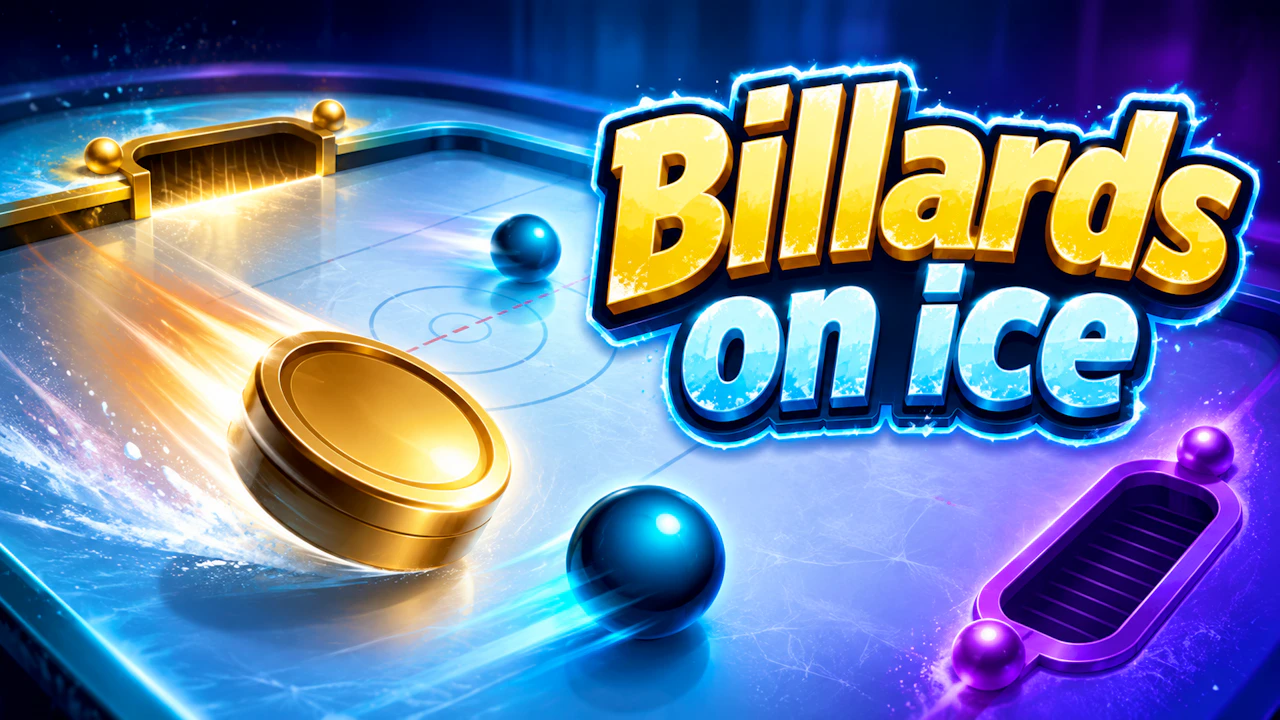
- Billiards on Ice. Pool, except the table does not want to let the balls stop. Shots that would be routine on felt turn into guesswork, and because it is turn-based you can hand the device over between shots without anyone losing their place.
- Penalty Kick Wiz. Penalty shoot-outs are already the most democratic part of football, and this keeps that spirit: one kick, one decision, instant verdict. Alternate shooter and watcher and keep a running tally across a best of five.
- Yenemy. The title says it, the enemy is you. Facing opponents that mirror your own habits is a strange kind of lesson, because every bad tendency you have gets reflected straight back. It is the pick on this list most likely to make you better at everything else.
- Knockback Knights. Knights in a small arena, and hits that send you flying. The appeal is that a blow does not just hurt, it moves you, so the fight is as much about where you stand as how often you swing. Rounds are short enough that the loser always wants one more.
- Stickman Street Fighting 3D. A straightforward brawler for people who want a fighting game without memorising combo lists. Stickman fighters trade polish for readability, which matters when you are both learning the controls mid-fight.
- Stickman Warriors. The more serious of the two stickman picks. It rewards learning the rhythm of attack and recovery, and the gap between a new player and a practised one shows up quickly, so expect the loser to ask for a tutorial by round three.
- Math Fight Club. Mental arithmetic as a competitive sport. It sounds like homework and plays like a game show, because speed matters as much as accuracy and the pressure of someone watching makes seven times eight genuinely difficult.
- Funny Shooter 2. A shooter in the arcade mould, with deliberately absurd enemies. On its own it is a decent score-chaser; with a friend it becomes a contest of who can survive longer, and the comedy of the enemy designs keeps spectating fun.
- Slope Racing 3D. A downhill racer where the only question is how far you get before the track beats you. It is here purely as a hot-seat distance contest. Set a number, hand over the keyboard and watch someone choke at the exact spot you did.
Getting a second player involved
Hot-seat play is undervalued. Online lobbies are fine, but the person in the room with you is a much better opponent, because you can see them panic and they can see you gloat, and nobody drops out because of their connection. For turn-based picks like the billiards game or the penalty shoot-out, agree a format before you start (best of three frames, five kicks each) so the session has a natural end.
For reflex games, the fairest handover is to swap after every death, not after every round. It keeps the waiting player engaged and stops the better player monopolising the screen.
On a phone, prop it against something. Passing a device back and forth across a table works far better when it is standing up and both of you can see the screen between turns.
Your first few sessions
The first ten minutes of any new multiplayer game are dominated by not knowing where the edges are. In Sumo Shove that means learning how close to the boundary you can stand before a nudge finishes you. In Knockback Knights it means working out how far a hit sends you. Spend the first couple of rounds deliberately losing while you poke at these limits, and you will win more in the twenty minutes after.
Sound helps more than people expect. Many small browser games telegraph an attack or a hazard with a cue a fraction before the animation, and that fraction is the difference in a close duel.
If you are the stronger player, handicap yourself rather than coasting. Play one-handed, or start each round a point behind. An even match is more fun for both people than a string of easy wins, and it keeps the other person coming back.
When you want something slower
Not every evening calls for shouting at a stickman. If the group would rather think than react, our round-up of strategy games that train your brain is the natural next stop, and puzzle fans will find plenty in our best puzzle games round-up. If you want more speed rather than less, the top action games list goes harder than anything here.
Pick one game from the list above, play it ten times with the same person, and only then move on. The rematches are where the fun actually lives.