Browser Racing Games, From Arcade Drifts to Time Trials
By IPObrains Editorial 6 min read
Free browser racing games sorted by the kind of driving they ask for, with notes on which suit a phone, which want a keyboard, and which deserve a second go.
Racing games get lumped together because they all have a vehicle in them, which is a bit like filing chess next to boxing because both use a clock. A circuit racer wants you to brake late and hold a line. A drift game wants you to throw the back end out on purpose. A parking game wants you to do almost nothing, slowly. Treating them as one genre is how people decide they dislike racing games when they have only tried the wrong sort.
Everything below runs in a browser tab for free, with nothing to install and no account. I've sorted them by the kind of driving they ask for, with one habit worth drilling per group, because the habit that wins a circuit race is the same one that puts you into a wall in a car park.
A word on devices first. Most of these are landscape games built for the arrow keys or WASD, and they are better on a laptop. A few are portrait games with tap and swipe steering, and those are better on a phone. The game page lists both, and it is worth a glance before you press play.
Circuit racing, and braking before the corner
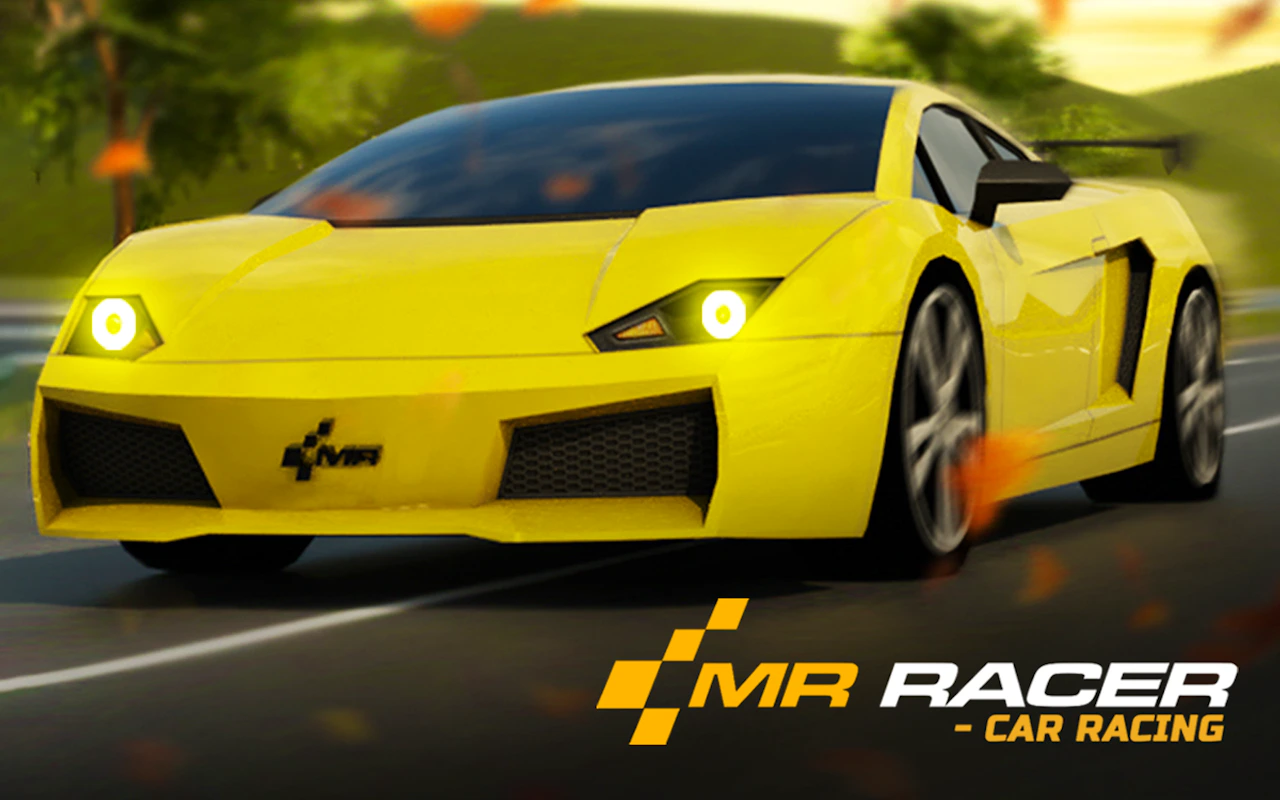
This is the classic shape: countdown, grid, a few laps, your position in the corner of the screen. MR RACER - Car Racing is the cleanest version on the site. The tracks are readable, the car does what you tell it, and you can see the next bend early enough to do something about it. Ramp Racing is the showier one, with jumps and sharp turns cut into the circuits and a garage to tinker in, and it rewards remembering where the ramps are more than raw pace. Mini Car Racing sits at the toy end, where you build the vehicle before you race it, and the build matters more than it looks like it should.
All three want a keyboard. Steering with on-screen buttons works, but corners arrive quickly and a thumb on glass is a blunt instrument.
The habit: finish braking before you turn. New players brake and steer at once, the car runs wide, and they add more steering to fix it, which makes it worse. Brake in a straight line, turn in, then feed the throttle back from the apex outward. These are second-session games. Race one is learning the track; the fun arrives around race four, when the braking points live in your hands rather than your head.
Drifting, and looking at the exit
Drift games are the opposite discipline. The slide is the point, and the skill is choosing where it ends. Super SUV Driving puts you in a city with heavy vehicles that take a moment to answer the wheel, so every drift has to start earlier than feels natural. Train Drift is the daft one, sliding locomotives through scenery while dodging other trains, and better than that sounds, because the long, heavy slide gives you time to think. Russian Car Drift 3D is the phone pick: portrait, isometric, tap to steer, and your progress sticks between sessions, so it suits five minutes in a queue.
The habit: look at the exit, not the car. Your hands follow your eyes, and if you are staring at the bonnet you will end up wherever the bonnet is pointing. Pick the spot on the far side of the corner and keep your eyes on it through the slide. It sounds like driving-instructor advice, and it is the one thing that separates people who drift from people who spin.
Super SUV Driving and Train Drift both reward a second visit once the handling makes sense. Russian Car Drift 3D is pleasant but shallow; the cars you earn keep you going longer than the driving does.
Stunt tracks, and the throttle as a tilt control
Bike stunt games are racing in the sense that a clock is running, but the real contest is with the track. Moto X3M: Spooky Land is the best of them here, and the hardest. Each level is a chain of ramps, loops and traps where the question is not how fast but at what angle. Moto Maniac 2 sends you across a half-built bridge at night with a drone for a torch, and it rewards patience over pace. Cycle Extreme swaps the engine for pedals and sets 20 levels of steep climbs and traps, where momentum is the thing you are managing.
These are keyboard games. Up is the throttle, left and right lean the bike, and you will press all three within the same second.
The habit: treat the throttle as a balance control, not a speed control. In the air, holding accelerate lifts the nose and letting go drops it. Most crashes are the rider landing on the back wheel with the throttle pinned, flipping, and blaming the ramp. Feather it. These are the most replayable games on the page. A level you finally clear is a level you immediately want to clear faster.
Traffic and chases, and reading two cars ahead
Here the road is the opponent. Endless Car Chase is a portrait game where you swipe to change lanes, the police never stop coming, and the score is how long you last. It is a good phone game precisely because there is so little to press: hold accelerate, steer, avoid the thing in front.
The habit: look two cars ahead, not one. The gap directly in front of you is already decided; the one you can still influence is the one beyond it. On a phone, use short swipes; a long drag commits you to a lane change you may not want by the time you get there. This is a one-and-done game, honestly. Once you have a score you are pleased with, the only reason to return is to beat it.
Parking, and precision at walking pace
The quietest group. Park the Cars asks you to thread a car into a marked bay through a lot full of obstacles, with the spaces getting tighter as you go. Parking Solution is closer to a sliding-block puzzle with cars, where you clear a jammed lot by moving vehicles in the right order, with a timed mode if you want pressure. It plays in either orientation, the only game here that does.
The habit: smaller inputs than you think, and stop before you correct. In a parking game, every tap of steering while moving is a commitment. If the angle is wrong, stop the car, straighten up, and go again. Park the Cars earns a second session once the tight levels arrive. Parking Solution is a lunch-break puzzle, done when you have seen enough layouts.
Which to open first
If you have a keyboard and twenty minutes, start with the circuit games and the braking habit, because it carries over to everything else here. If you are on a phone, Russian Car Drift 3D and Endless Car Chase are the two built for it, and nothing in the stunt group will feel right on glass. An older laptop will manage the parking and portrait games; the 3D city and circuit games are the ones to test, and our guide to games that run well on low-end devices explains how to tell. If you want this to become improvement rather than a pleasant half hour, the practice habits piece covers how to run a session so the lesson sticks.
Pick one game from one group, drive three races, and change nothing except the habit for that group. Then look at the lap times, not the finishing position. The time is the honest number.