Classic Arcade Ideas That Still Hold Up in a Browser
By IPObrains Editorial 6 min read
Six old arcade ideas, from snake to shoot-em-ups, with the browser versions that keep the original tension and the remakes that bury it under coins and timers.
Most of the games in the Arcade and Classics sections are remakes of something from forty years ago. The falling-blocks game everyone knows, the snake that eats its own tail, the paddle and the wall of bricks, the ship at the bottom of the screen with a sky full of aliens. Those ideas survived because each one is a single piece of tension that never lets go. Gravity does not pause. The snake does not stop.
What the remakes change is everything around that tension, and this is where it goes wrong. Coins, timers, upgrades, characters to earn, a shop button in the corner. Some of it is harmless. A lot of it is noise over a game that was finished in 1982. Below, the ideas one by one, the site's versions sorted into the ones that trust the original and the ones that don't, and in each case the thing the old arcade players knew that still works.
Falling pieces and the stack that never stops
Honest admission: there's no straight falling-blocks game in the Classics or Arcade sections at the moment, which is a gap. The nearest cousin is Spiral Blitz, where a ball drops through a tower of rotating platforms and you twist the tower to keep a gap underneath it. Gravity does the work, you only steer, and a run ends the moment you stop thinking one platform ahead. It's portrait, built for a thumb, and best played ignoring the coloured barriers you are meant to smash through for speed.
The old players' rule for anything that stacks: keep the surface flat and never bury a hole. Here that means keeping the ball in the middle of the gap, because the edge is where the next wall is.
Snake and the games that grew out of it
Snake is the purest arcade idea on the site, and the one the remakes have done the most to. The original is you, a tail, a wall and the inevitable. Every extra thing is a dilution.
Skibidi Snake keeps closest to it. You grow by eating numbers, you die by hitting your tail or the arena obstacles, and that's all. Portrait and touch, keyboard on a desktop. The obstacles raise the stakes without changing the question, which is always where your tail will be in three moves.
Worms Zone and Gusano.io Worms Snake Game are the arena version, where you share the map with rival worms and aim to end up the longest. A different game wearing snake's skin, and a decent one, but look at what has been added: speed boosts, power-ups, costumes for your worm. The boost trades length for speed, so the game is quietly asking you to spend the very thing you are trying to grow. Both are landscape, mouse or keyboard, and suit a quarter of an hour of mischief rather than a slow, careful build.
What the old players knew: never turn into open space. Sweep the board in rows like mowing a lawn, and only leave the pattern for food one move off your line. The player who zigzags across the middle dies first.
Bricks, paddles and the bouncing ball
There's no plain brick-breaker or paddle game in these two categories either, which surprised me. What there is instead is Boing Bang, the other great bouncing-ball arcade idea. You have a blaster, large balls bounce around the room, and shooting one splits it into two smaller, faster ones. Landscape, mouse and keyboard. It keeps what made the paddle games good: a ball's path is entirely predictable, and the fear comes from how many paths you have to track at once. The remake tell in this family is a countdown. A bouncing-ball game with a timer does not trust its own tension.
The old skill: shoot the smallest ball first, always. A big ball is slow and you can duck under it. Splitting a big one while small ones are still loose is how everyone loses.
One button, one jump, no second chances
The family with the most games and the most noise, because a one-button game is cheap to make and easy to spoil.
Geometrical Dash is the clean version. A square runs, you tap to jump, spikes end you. It counts your attempts on screen, and that count is the only progression the game has, which is the right amount. Landscape, and better on a keyboard than a thumb because the timing windows are tight.
Spikes & Feathers is the flapping kind, hand-drawn and portrait. It is about rhythm rather than speed, and one of the few that gets harder by adding a new obstacle type rather than only going faster.
Hook is where the noise creeps in. The swinging is good and the release timing is the whole game. Then it starts handing you characters to earn, and every one of them is a reason to keep playing that isn't the game. Play it for the swing and ignore the wardrobe.
The old players' tip for all of these: look ahead of the character, not at it. The character is where you were; the obstacle is where you'll be. And tap short. Holding the button is nearly always worse than a quick press.
Mazes, dots and the things that chase you
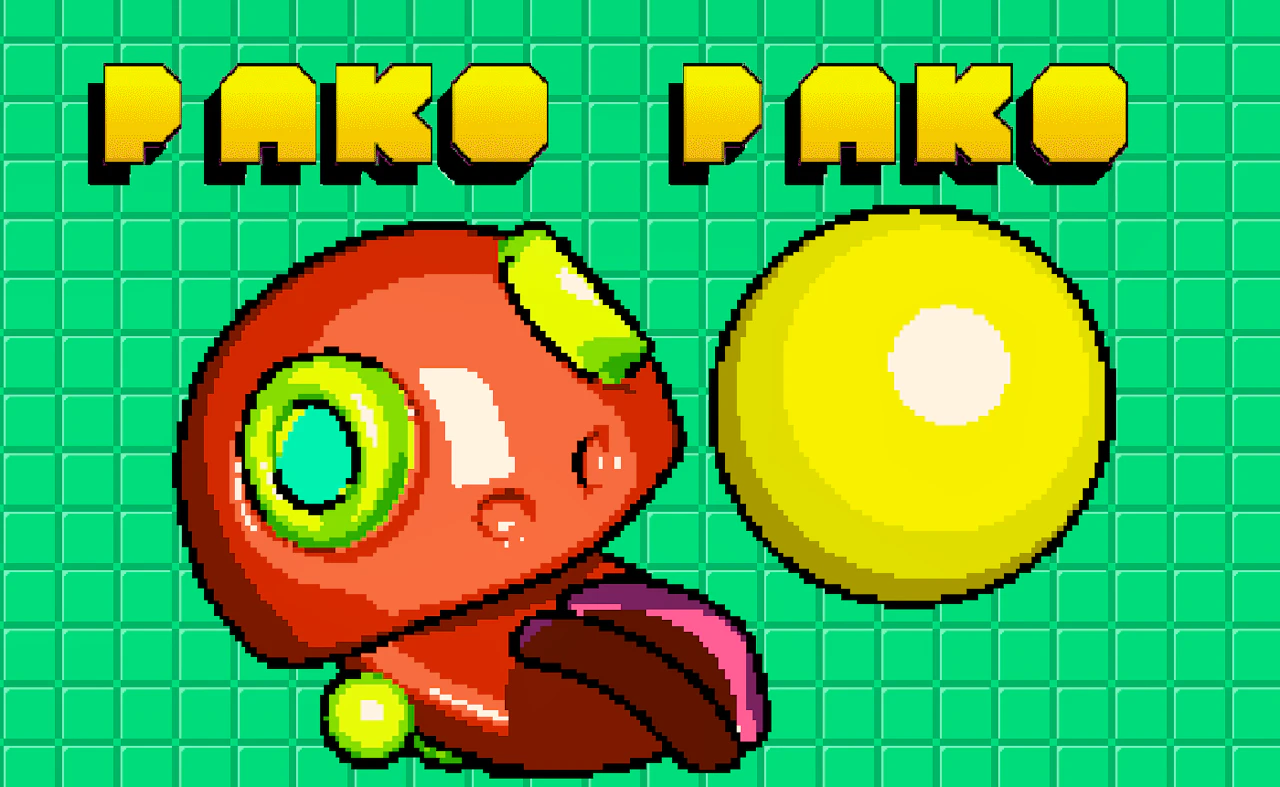
Paco Paco is a straight remake of the maze-and-pellets idea, done in 3D, landscape, mouse or keyboard. A sphere eats pellets, ghosts chase it, and clearing the maze opens the next one. The 3D slightly hurts, because corners are harder to read than on a flat grid, but the ghosts move in patterns you can learn, which is the part that matters. It adds nothing else, and I respect that.
BattleBox takes the maze idea sideways into memory: a hidden grid, treasure and monsters under the tiles, strawberries to keep you alive. More cousin than remake, but it has the same tension of every step revealing something you now have to remember.
What the old players knew about mazes: clear the awkward corners early, while the chasers are slow and the board is full. The pellets in the dead end will cost you a life if you leave them for last.
Shoot-em-ups and the sky that fills up
The ship at the bottom and the waves above it is the arcade idea that has picked up the most baggage, because upgrades fit it so naturally. The original had none. You had a gun and the aliens came down.
Strike Galaxy Attack is the closest, a lone ship against waves of space birds in portrait, and it is good for about five minutes before the upgrade loop takes over and the skill stops being dodging and starts being pickup management. Play the early waves for the old feeling.
Evil Invader is the other way round. Landscape, mouse and keyboard, and the arsenal and levelling are the game rather than a layer on top of it. A survival shooter wearing the invader name, and on its own terms it works.
The old skill is the one nobody uses: shoot where the enemy will be in half a second, not where it is, and when a power-up falls into the firing line, let it go. A power-up you died for was a trap.
Nearly everything above is flat 2D with little moving at once, so an old phone will cope; the guide to games that run well on older phones explains why. For the harder, meaner end of the arcade, go to the top action games list.
Pick one idea from the six, open the cleanest version of it, and play ten rounds without touching a single coin, upgrade or bonus. Notice whether you miss them. You won't, and the score will go up anyway.